In the ancient world, there existed a Greek word, apologia, which meant "to defend," much like a lawyer in a court of law. Within the realm of Christianity, this concept evolved into what we now know as apologetics – the practice of presenting a compelling case for the truth of Christian beliefs. It wasn't about engaging in heated debates, but rather constructing a logical sequence of statements leading to a conclusion.
The essence of apologetics lies in its ability to promote civil discourse and prevent unnecessary conflicts when discussing matters of faith. You see, strong, well-reasoned arguments can be a bridge rather than a barrier in conversations about deeply held beliefs. It's a tool Christians use to engage with those who may not share their faith, and it serves a vital purpose in modern times.
A common debate among Christians revolves around whether they should solely preach the gospel and let the Holy Spirit do the rest. However, when we examine the lives of Jesus and His disciples, they set examples through both their words and actions that underscored the importance of apologetics.
Apologetics holds significance today for several reasons. Firstly, it plays a crucial role in shaping the culture. The backdrop of culture can either facilitate or hinder the acceptance of the gospel. People raised in cultures sympathetic to Christianity are more likely to be receptive to its message. In contrast, secularism, which denies the supernatural, can make it challenging for the gospel to be viewed as a rational option. Thus, apologetics strives to create an environment where Christian faith is seen as a reasonable and viable alternative.
Secondly, apologetics offers immense personal benefits to individual Christians. Engaging in the study of apologetics delves into life's most profound questions, providing depth and richness to one's own faith.
Now, some may argue that apologetics alone rarely leads people to faith in Christ. While this may be true in some cases, it's essential to be sensitive to those who seek rational reasons for belief. Moreover, even though the number of people who reject Christ for intellectual reasons is relatively small, their conversion can have a profound impact on others, as seen in the conversion of C.S. Lewis.
The Existence of God: The Most Important Inquiry
Before we delve into evidence for the existence of God, we must establish why it matters. For if there is no God, the very concepts of meaning, value, and purpose become illusory. Atheism, denying the existence of God, often leads to a worldview devoid of meaning and purpose, casting humanity and the universe into a state of purposelessness and hopelessness.
Without God, morality becomes subjective, as there is no objective standard to define right from wrong. In essence, morality becomes a matter of personal preference, with no higher authority to appeal to. A godless universe implies a world of cosmic accident.
On the contrary, the existence of God provides a glimmer of hope for humanity. It offers the possibility of meaning and purpose. But this raises the question: How difficult is it to live consistently with an atheistic worldview? In practice, even atheists often live as if life does have meaning and value, creating a significant inconsistency between their beliefs and actions.
The horror of a world devoid of objective moral values becomes evident in events like the Holocaust. Without a moral framework rooted in God, our world becomes akin to Auschwitz, a place where moral distinctions disintegrate. The conclusion is bleak: life loses its purpose, and all human endeavors appear insignificant, akin to rearranging deck chairs on a sinking ship.
Examining the Existence of God
With the importance of God's existence established, we can now explore arguments supporting this foundational belief.
1. The Kalam Cosmological Argument
Premise 1: Whatever begins to exist has a cause.
Premise 2: The universe began to exist.
Conclusion: Therefore, the universe has a cause.
The first premise is intuitive, as it's widely accepted that nothing comes into existence without a cause. To dispute it would imply that the entire known universe spontaneously materialized, which defies reason.
Think of it this way: If you see a sandcastle on the beach, you know someone built it. In the same way, if we see the universe, it must have had a creator – God. The second premise, supported by scientific evidence like the Big Bang theory, posits a specific beginning to the universe. The universe's expansion and the second law of thermodynamics further support the idea that it began to exist.
2. The Moral Argument
Imagine a world without God where right and wrong are just made-up ideas. That world could be chaotic, but with God, we have a foundation for morality. This argument addresses the existence of objective moral values and duties:
Premise 1: If God does not exist, objective moral values and duties do not exist.
Premise 2: Objective moral values do exist.
Conclusion: Therefore, God must exist.
The first premise suggests that the foundation for objective moral values and duties must be transcendent, as atheism offers no rational explanation for their existence. Science cannot account for moral values, and claims that values like justice and mercy exist independently; its just improbable.
Premise 2 aligns with the common belief in the existence of objective moral values, indicating that humanity universally recognizes their presence.
3. The Problem of Suffering
One of the most challenging objections to the existence of God is the problem of suffering. While atheists argue that an all-loving, all-powerful God can't coexist with suffering, theistic responses provide a different perspective.
The presence of suffering can be seen as a consequence of human rebellion against God's purposes, and it extends beyond this life into eternity. Suffering serves as a backdrop against which heavenly joy becomes more meaningful. Additionally, the knowledge of God is considered an immeasurable good, offering a rationale for suffering's existence in the world.
In essence, the problem of suffering underscores the complexity of human free will and God's desire to save as many as possible while respecting their choices.
The Claims of Christianity
Having established the foundation for belief in God, we now turn to the radical personal claims of Jesus Christ. Jesus, a historical figure supported by a wealth of ancient sources, claimed to be the Messiah, the Son of God, and wielded divine authority.
Evidence for Jesus' claims arises from His teachings, actions, and the reliability of the Gospels. He equated His authority with that of the Law of Moses, adjusted the Law, performed miracles, and asserted the right to forgive sins. These actions and teachings collectively support His divine authority.
Imagine if you went to visit a friend's grave, and the grave was empty, and then you saw your friend alive. That's what happened with Jesus, and it's why we believe in His resurrection.
The central claim of Christianity revolves around the resurrection of Jesus Christ. Three compelling facts support this belief: the empty tomb, postmortem appearances of Jesus, and the origin of the Christian faith. The empty tomb, reported in early sources, and the resurrection appearances underscore the truth of the resurrection story. The origin of Christianity itself hinges on the disciples' belief in Jesus' resurrection.
The Challenge of Religious Diversity
One of the most challenging aspects of Christianity for non-believers is the claim that an eternal relationship with God is attainable exclusively through faith in Jesus Christ. This exclusivity appears arrogant to some, given the diverse array of world religions.
However, the issue of religious diversity can be reframed as a question of whether God can be found through other means. The Christian perspective acknowledges the possibility of salvation through God's general revelation in nature and conscience. While not everyone may hear the gospel, God's providence is believed to ensure that those who would accept it if given the chance will hear it.
God really wants lots of people to be saved and only a few to be lost. He's trying to make sure that as many people as possible choose to follow Him.
But it's not easy for God to make a world where everyone believes in Him and is saved because people have their own free will. Some people will choose not to follow Him, no matter what.
So, it's possible that God has organized our world in the best way possible to have a balance between those who choose to follow Him and those who don't.
As Christians, we believe it's our job to tell everyone about Jesus because God has set things up so that the people who would follow Him if they knew about Him will get the chance to hear about Him. So, we should be kind to those who don't believe and try our best to share the message of Jesus with them.
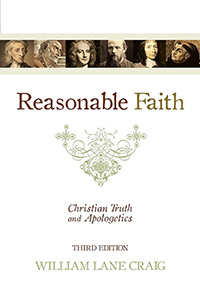
"Reasonable Faith" by William Lane Craig serves as a powerful tool for Christians to engage in meaningful dialogue and present a rational case for their faith. It begins with the foundational question of God's existence, explores arguments and evidence, and addresses objections. Ultimately, it provides a bridge for individuals to consider the profound claims of Christianity, offering hope, meaning, and purpose in a world full of questions.