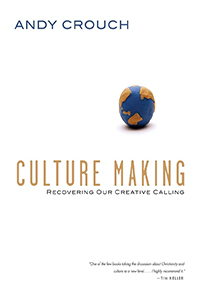
Culture Making by Andy Crouch is an exploration of the multifaceted nature of culture and its profound impact on our lives. Through a thoughtful journey into the realms of history, art, language, and religion, Crouch guides readers in understanding how culture is more than just the latest trends or social media buzz – it’s a complex network bound by endless ideas, each contributing to the narrative of human existence. In these chapters, Crouch invites us to envision ourselves as newcomers in a world brimming with unfamiliarity. He reminds us that, as humans, we are inherently curious and adaptable, destined to learn and adapt to our surroundings. His invitation sets the stage for an exploration of culture’s profound influence on our lives.
Crouch takes us on a fascinating trip back in time to the era of cave-dwelling ancestors who, contrary to the caveman stereotype, were not only survivors but also artists. Their intricate cave paintings, dating back over 14,000 years, reveal that artistry was among the first vocations of humankind. But these early humans were not limited to artistic pursuits alone; they were also inventors, caretakers of animals, toy makers, and storytellers. These ancient narratives, he argues, served as the foundation for humans to grapple with the mysteries of existence.
As we journey through history, Crouch introduces us to the world of ancient myths and legends, stories that sought to explain the origins of the universe. Yet, he highlights a distinct narrative found in the opening pages of the Hebrew Bible – the book of Genesis. This creation story offers a unique perspective, depicting a Creator who, content with His orderly work, brings harmony to chaos. The idea of humans created in the image of a calm and purposeful Creator addresses the innate human fear of disorder and chaos, offering an alternative narrative to the world’s turbulent creation myths.
One of the book’s central themes is that culture transcends physical boundaries and is deeply embedded in our everyday experiences, even in places like courthouses. The act of obtaining a marriage license or changing one’s name, seemingly mundane tasks, are intricately tied to culture. When we venture into unfamiliar territories, we often grapple with cultural norms that may elevate certain individuals or groups, thereby establishing hierarchies and sometimes making others feel culturally disempowered.
Crouch expertly navigates through various physical spaces, from water treatment plants to malls and churches, demonstrating how each holds a unique significance within our culture. Some of these spaces exert more influence than others and have the power to shape our horizons, extending their impact beyond geographical boundaries.
Language, as Crouch explains, is a dynamic and living entity that evolves over time. He traces the history of English spelling, highlighting how dictionaries played a pivotal role in standardizing language. Language acts as a mirror, reflecting the broader cultural transformations, often driven by technological advancements. The example of lasers, from their humble beginnings as mere concepts to their common presence in modern life. Just take a look in any office and you will see the usage of lasers within computers, printers, or even a mouse. The point Crouch is making is just like how fast language is changing, so is technology. This results in culture changing at a fast rate all in the name of “improvement”.
But the concept of “improvement” within culture can also be complex. Language, much like culture itself, undergoes continuous transformation, sometimes losing more than it gains. Technological advancements have significantly accelerated these cultural shifts, shaping the world we live in today.
Crouch masterfully illustrates culture as a collaborative endeavor, akin to building blocks. True culture change cannot be imposed; it requires the creation of something new and innovative to replace the old. Yet, it’s a shared process that relies on the collective acceptance of these fresh ideas. Without sharing and embracing these creations, they remain outside the realm of culture,
never becoming an integral part of it.
Crouch also delves into multiculturalism, emphasizing the diverse traditions and practices that emerge from different places and times. Each culture is like a unique time capsule, reflecting the specific context from which it originates. Crouch sheds light on how culture, even in its most ordinary manifestations, can sometimes make individuals feel like outsiders in unfamiliar settings, leading to a sense of inequality.
Christianity’s relationship with culture is a recurring theme throughout the book. Crouch portrays the various approaches Christians take when dealing with cultural changes. Some may choose to resist, while others actively engage and influence culture. He compellingly argues that culture is an extension of humanity’s creative nature, mirroring God’s creative act.
The Bible itself is presented as a treasure trove of cultural artifacts, containing poetry, proverbs, songs, letters, and historical accounts. Its pages provide a foundational source for understanding culture’s role in our lives, offering insights into the human experience.
As Crouch concludes, he reminds us that culture has been an intrinsic part of human history from the very beginning. It shapes our interactions, beliefs, and the way we perceive the world. Culture is not merely a human creation; it’s a divine gift that reflects both the beauty and brokenness of the world. He draws parallels between culture-making and the life and ministry of Jesus, who changed the status quo and brought new perspectives to the world.
Crouch encourages us to embark on the journey of cultural change, assuring us that it begins with small steps. He emphasizes the importance of recognizing the joy and surprise in life, cultivating gratitude for our creative abilities, and taking courageous risks to propose new ideas. While human effort plays a vital role in shaping culture, it is equally important to rely on divine guidance and God’s grace.
In essence, “Culture Making” by Andy Crouch offers readers a deeper understanding of the complex and ever-evolving nature of culture. This book serves as a guide to navigating the intricate terrain of culture and its role in our world, making it a must-read for anyone seeking to delve into the depths of human existence and creativity.