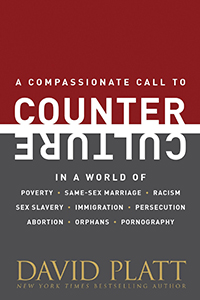
Imagine the Gospel as a different kind of story – one that doesn’t always fit in with what most people in our society expect or want. It’s like being a rebel against the way things usually work in our culture. Sometimes, this story might seem kind of strange or even make some people upset. But what’s this unique Gospel that doesn’t always match our world’s ideas?
Well, Counter Culture by David Platt is all about this idea. It says that even though the Gospel goes against what’s popular in our culture, it should guide everything a Christian does. Platt believes that this message, which challenges the usual norms of society, can be tough to accept in a world that often cares more about doing whatever feels good at the moment.
So, what’s this Gospel message Platt keeps talking about? Well, it’s not too hard to find. Right at the beginning of the Bible, the first words are “In the beginning, God.” These words tell us that there’s a God who created everything in the world and the sky. This God is all about goodness, fairness, and making things right. In a way, we all belong to this Creator.
But as we keep reading through the Bible, it reminds us of how people usually react to this God. It’s not always a good reaction. People often rebel, disobey, question, and even try to hide from God. Way back in the story of Adam and Eve, they ate from a tree that gave them the knowledge of good and evil. This messed up not just their understanding of right and wrong, but it also messed up our own judgment. We started thinking that we could decide what’s right and wrong on our own. We became pretty selfish and believed the world revolved around us, even when God said not to do certain things. It was like we started worshiping ourselves.
Now, who’s this Jesus we hear about in the Bible? He’s not just a good person or a teacher. He makes some incredible claims about Himself. He says He’s the way, the truth, and the life – the path to salvation. You see, for God to be fair when judging us without giving up on being good, He has to see us as people who make mistakes. But at the same time, for God to show us kindness, there has to be a way to save us from those mistakes. That’s where Jesus comes in. He’s both completely God and completely human. He lived a perfect life, and His sacrifice is enough to make up for our mistakes. This whole story – from creation to our mistakes and then to our rescue – can be kind of surprising. The idea that God became a human doesn’t sit well with many beliefs and cultures. But if we believe in the Gospel, this is the story we’re following. It might be surprising to some, but it’s the story that shapes our lives. Even when the world doesn’t agree with this story, Christians are supposed to be strong and willing to make sacrifices, even when others don’t like it.
We’re also supposed to look out for people who are poor, just like Jesus told us. Poverty is a big problem everywhere, but sometimes, churches in places like the Western world don’t do enough to help. Surprisingly, we often don’t see ourselves as rich. We tend to think that only super-rich people with lots of money and fancy stuff are considered wealthy. But the fact that we think this way shows just how much wealth we actually have. So, when we hear what Jesus says about helping those in need, and we see the big gap between what He says and how many poor people there are, it should make us think. In a part of the Bible called James, we learn that having faith without doing something about it is pretty much useless. Jesus also tells us in the Bible that you can tell a tree by the fruit it produces. So, what actions do we take? What kind of good things do we do? When we help people who are struggling financially, it’s not about trying to earn a ticket to heaven. It’s not like we’re working super hard to get into eternity. Instead, because we’ve freely received the promise of eternal life through Jesus, we’re free to help others right now. It’s not that we “have to” help the poor; it’s that we “want to.” This desire to help shows what’s in our hearts, and it’s a way to joyfully give back from all that we’ve been given. Throughout the Bible, we see that God cares deeply for people who are poor, and our goal should be to have that same kind of caring heart.
When it comes to work, it’s actually a gift from God. We should put our best effort into it and aim for success. But it’s not only about how much money we make; it’s also about what we do with it afterward. After working hard and earning money, we should live simple lives and be content without constantly chasing after more fancy things. And from the money we earn, we should share with our churches, help individuals in need, and support good causes. We should also find ways to help without using money and focus on building our eternal life instead of just focusing on the present one.
The Gospel also tells us to stand against abortion because God values the lives of unborn children. Abortion isn’t just a political issue; it’s also a spiritual one. The Bible shows us that God cares deeply about babies before they’re born. It tells us that He carefully puts us together in our mother’s womb and is there with us from the very start. Creating human life is something that involves God, and we shouldn’t try to mess with it using medicine or technology. The big question about abortion is whether that tiny life in the womb is a person. If it is, then abortion is taking a life – it’s seen as murder. If that life is a person, there’s really no other reason that justifies abortion. We can’t end the life of an unborn person just because someone wants privacy or the right to choose. Even in difficult complicated situations, we would never say it’s okay to end a baby’s life just because of how they were conceived. Ultimately, God can and will forgive those who have had abortions. The Gospel offers hope and freedom, even from our biggest mistakes.
Caring for widows and orphans is another important part of the Gospel because God has a heart for them. Did you know that there are millions of children around the world who don’t have parents to take care of them? The Bible repeatedly shows us that God cares for these kids and for people who are in tough situations. The church is called to be like a mirror of God’s love and care, just like we see in the story of Ruth. She was a widow from a foreign land, with no family and no hope. But there was a man named Boaz who showed her kindness, pity, and love. He ended up marrying her and taking care of her and her mother-in-law, Naomi. The story of Ruth isn’t just a nice fairy tale; it’s a picture of God’s love and care for people who are in need. The church is supposed to be like Boaz, showing God’s love and care in our modern world. We have incredible opportunities, like adoption and foster care, to be examples of God’s love and care for millions of children who really need it. And in our culture, there are more and more single-parent families who need help raising their children. We can support them by fixing their homes, helping with bills, and taking care of their kids when they need it. As Christians, our families should extend beyond just our relatives to include orphans and strangers. Plus, churches in Western cultures have plenty of resources that could be used to help people who are struggling. But what we really need is the determination to make a difference. We need to care enough about widows, orphans, and people in need to take action and show them genuine compassion.
Sex slavery and the industry itself are big issues that the Gospel tells us to resist because every person is valuable in God’s eyes. Sex slavery is a terrible problem all over the world, and it’s often connected to the creation of the industry itself. When we watch this stuff, we’re treating people like objects instead of recognizing them as unique individuals that God made. The Gospel takes a strong stand against this issue by reminding us that God became a slave Himself, which shows us how much He values even those who are trapped in different forms of slavery.
Marriage, according to the Gospel, should be based on how God designed it. It’s meant to bring a man and a woman together in a way that fits perfectly. Marriage isn’t just about finding happiness for ourselves; it’s also about showing the love that God has for us. It’s like a picture of Christ’s love for the church. In a marriage, husbands and wives have special roles and responsibilities, all centered on love and self-sacrifice.
Our sexuality should also follow God’s plan because He created us and knows what’s best for us. The Bible gives us guidelines for how we should behave sexually. It tells us that sex should only happen within the boundaries of marriage, between a man and a woman. Any sexual activity outside of marriage is seen as wrong, and we’re encouraged to stay away from it. But even if we’ve made mistakes in the past, the Gospel offers us a chance to change and become better.
Racism is another issue that the Gospel addresses. It teaches us that we’re all one in Christ. Every person on this planet is created in God’s image, no matter where they come from. The Bible talks a lot about unity in Christ, emphasizing that in God’s eyes, there’s no real difference between people of different ethnic backgrounds. So, when our culture tries to divide people based on the color of their skin or where they come from, we should stand up for what’s right. We should love and accept every person, just as God loves and accepts us.
Caring for refugees is also something the Gospel tells us to do. Sometimes, because of wars or other problems, people have to leave their homes and go to new places. God often makes this happen, and it can give us the chance to share the Gospel with people who are going through tough times. Refugees need not only the Gospel but also our care and support. We, as Christians, can make a big difference by welcoming them and helping them out.
Finally, when it comes to religious persecution, we should always be ready to stand up for what’s right. The Gospel says that people should be free to choose their faith, and governments should respect that freedom. We should be bold about living out our faith, even when it’s hard, and even when we face opposition.
So, yes, sometimes the message of the Gospel clashes with the values of our culture. But you should know that embracing the Gospel means standing up for these important issues. Counter Culture serves as a timely and relevant reminder for Christians to care for the poor, value the lives of the unborn, help widows and orphans, resist things like sex slavery and pornography, uphold the sanctity of marriage, live according to God’s plan for our sexuality, fight against racism, support refugees, and defend religious freedom. Even when our culture disagrees, Christians are called to act with strong beliefs and love, knowing that God is always in control.